
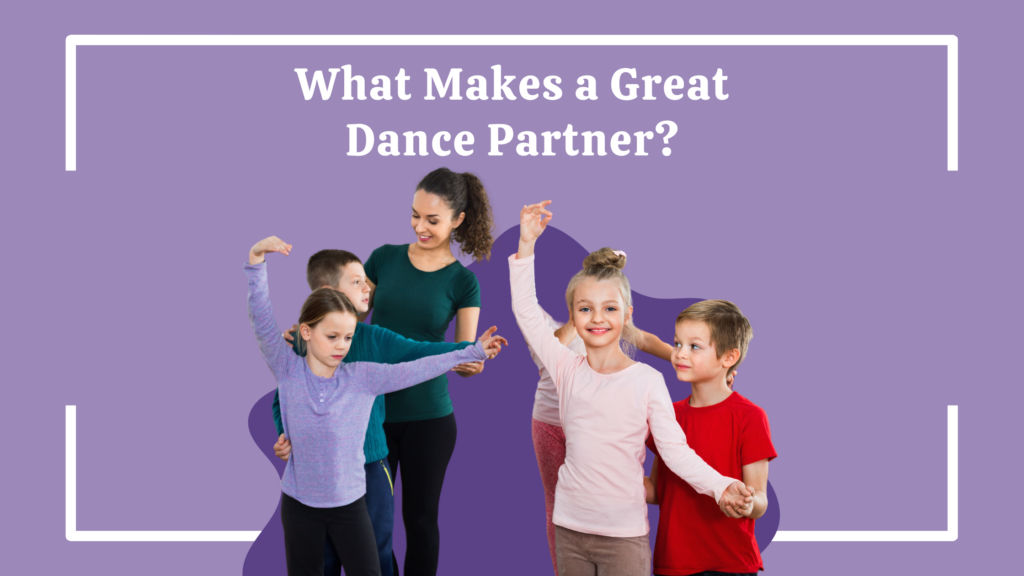
Dancing on your own is one thing. Dancing with somebody else? That brings a whole new challenge.
Suddenly, you aren’t only thinking about your own steps. You have another person’s timing, position and movement to consider. You might need to turn together, support each other, change places or somehow arrive at exactly the same spot on exactly the same count.
When it works, it can feel brilliant. When it doesn’t… well, that’s why we rehearse!
So, what actually makes someone a great dance partner?
It’s Not About Being the Best Dancer
You don’t have to be the strongest or most experienced dancer in the room to be a brilliant partner.
Being dependable matters much more.
If you’re supposed to move on count five, your partner needs to know you’ll be there on count five. If you’re learning a partnered movement, both dancers need to understand their role and practise it properly.
That reliability helps both dancers feel more comfortable. Instead of wondering what the other person is going to do, you can concentrate on performing the movement together.
You Have to Pay Attention to Each Other
Partner work involves plenty of communication, and surprisingly little of it needs words.
A shift in weight might tell you your partner is ready to move. Eye contact can help you begin together. Changes in pressure, position or timing can tell you that something needs adjusting.
This means dancers have to pay attention to more than their own choreography.
Over time, students learn to become more aware of the people around them, which is an important part of teamwork both inside and outside the studio.
Trust Is Built Through Practice
Trust becomes especially important when choreography includes balances, supported movements or more complicated partner work.
You need to know that the other person understands their role, and they need the same confidence in you.
That trust doesn’t appear after one rehearsal. It develops by practising together, communicating clearly and becoming familiar with how the other person moves.
And there’s something particularly satisfying about finally mastering a movement that only works because two dancers have learnt how to work together.
Mistakes Need Teamwork, Not Blame
Sooner or later, somebody is going to forget a count, turn the wrong way or accidentally end up standing exactly where their partner was supposed to be.
That’s part of rehearsing.
If something goes wrong and you don’t think the mistake was yours, try to work out what happened together rather than placing blame. Talking about the problem calmly and tactfully makes it much easier to find a solution and get the partnership back on track.
Great dance partners don’t spend rehearsal arguing about whose fault something was. They communicate, make adjustments and try again.
Being able to laugh at the occasional mix-up helps too. Dance should still be enjoyable, even when you’re working hard.
A Good Partner Wants You to Do Well Too
Partner dancing isn’t a competition between the two people performing it.
Sometimes one dancer will learn choreography more quickly. The other might be stronger at timing, performance or a particular skill. Those differences give dancers opportunities to help each other.
A supportive partner encourages rather than criticises. They listen when the other person feels unsure and celebrate when something finally clicks.
It’s a useful lesson to learn: your own success doesn’t have to come at somebody else’s expense. Sometimes your best performance happens because you’ve helped each other get there.
Two Dancers, One Performance
Partner dancing teaches much more than how to perform choreography next to somebody else.
It develops communication, patience, awareness, responsibility and trust. Students learn when to lead, when to follow, how to respond when things don’t go to plan and how their own actions affect somebody else.
And when two dancers finally get that tricky section perfectly in sync? That’s a pretty satisfying feeling.
At Arabesque School of Performing Arts, students have opportunities to develop their individual dance skills while also learning how to rehearse, communicate and perform alongside others.
Come and try one of our classes at Arabesque School of Performing Arts and discover how much you can learn when you dance together.